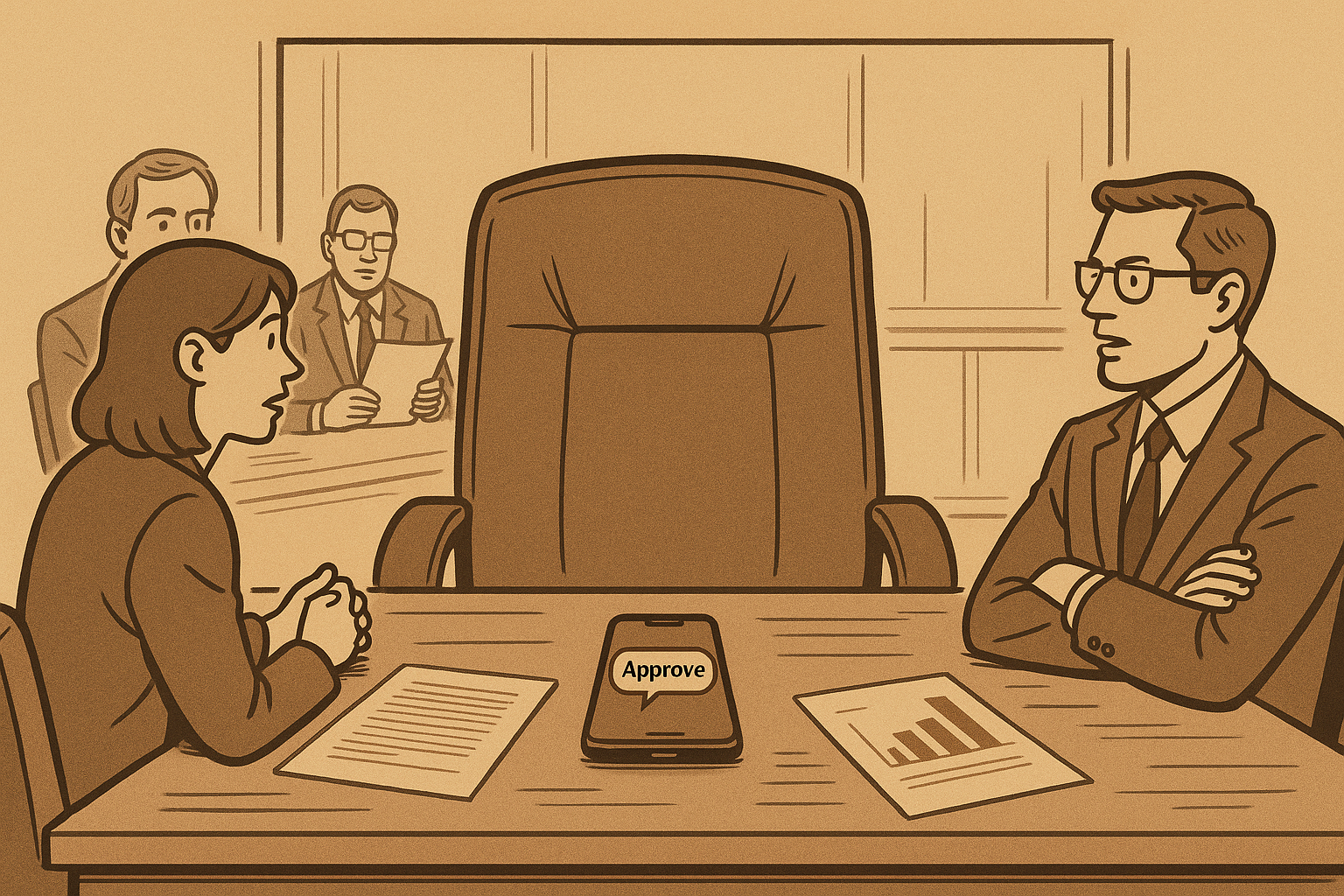
Scene
Two partners. One has started talking about slowing down. The other has just renewed the office lease for ten years. Both approved it, but for different reasons. One saw stability. The other saw obligation. Neither said what they really meant.
The staff sense it before the partners do. The senior one starts mentoring less, defers recruitment, avoids technology upgrades. The junior one doubles down—new hires, new software, new marketing spend. Each views the other’s actions as proof they’re “checked out” or “reckless.” The partnership hasn’t broken, but the tempo has split.
Pattern: Temporal Drift
This isn’t a strategy disagreement. It’s a time-horizon split—two different clocks running in the same firm. One partner optimises for end value: capital extraction, clean exit, risk control. The other optimises for future value: reinvestment, growth, and long-term positioning.
On paper their goals overlap. In conversation they diverge. Every decision exposes the gap:
- reinvest profits or retain cash
- renew staff contracts or delay
- buy new premises or maintain flexibility
The real problem isn’t disagreement; it’s omission. Neither partner has stated the endpoint they’re solving for. They continue debating tactics without agreeing on timeframes, which makes both feel betrayed.
Temporal drift is rarely visible on a balance sheet. It shows in body language: averted eyes in planning meetings, long pauses before approving expenditure, growing sarcasm around “your five-year plan.” Once humour turns brittle, drift has entered its second stage—defensive adaptation.
Analysis: How Drift Becomes Dispute
The pattern follows three predictable phases.
- Divergence. Partners pursue subtly different metrics—one tracks drawings, the other tracks pipeline. Performance conversations become misaligned.
- Decoding. Each partner starts interpreting the other’s behaviour through motive rather than logic. “He’s blocking investment” becomes “he’s milking it before he leaves.”
- Defence. Formality increases. Emails become records, not dialogue. Decisions slow, resentment hardens. The firm’s energy shifts from creation to containment.
This is how succession issues turn into shareholder disputes. What begins as different plans for the future ends as suspicion about the past.
Framework: Assess → Align → Act
Assess – From Fog to Facts
List each owner’s:
- preferred exit year
- minimum financial extraction target
- appetite for further capital contribution
- desired ongoing role after transition
Plot these on a single page. You will often discover there are two businesses disguised as one. The map is not emotional; it’s arithmetic.
Align – From Deadlock to Decisions
Once the facts are visible, stop negotiating about “commitment” and start negotiating about structure.
- Adjust equity weightings according to future contribution.
- Create an exit formula—valuation method, funding source, payment timeline.
- Replace verbal assurances with term sheets.
Alignment doesn’t mean everyone stays. It means everyone knows what staying or leaving entails.
Act – From Drift to Done
Lock the chosen path into a short, dated protocol. Review progress every quarter. Invite an external chair if trust is eroding. The protocol replaces personality with process. Most disputes collapse because there’s no agreed calendar; decisions lose sequence. Time is both the disease and the cure.
Tool: The Exit Clarity Test
A one-page audit you can do in under an hour.
Ask each owner to answer independently:
- When do you intend to leave?
- What do you need financially to feel complete?
- Would you sell to your partner at that value?
- What ongoing role, if any, would you want?
- Who decides timing if the other wants to exit early?
Compare answers. Any mismatch of more than two years or 20 per cent valuation signals emerging drift.
Why It Matters
Every partnership ends. Only timing is negotiable. When leaders postpone that conversation, value bleeds quietly—through stalled decisions, rising staff attrition, and reputational fatigue. By the time lawyers are called, half the damage is already sunk cost.
Succession handled early is governance. Succession handled late is crisis management. The difference is paperwork done when people still like each other.
Call to Action
If this sounds like one of your clients, introduce them to The Unravelling Map™.
We handle the structural and relational side so you can stay their trusted adviser.