The Reactor in the Room
Scene
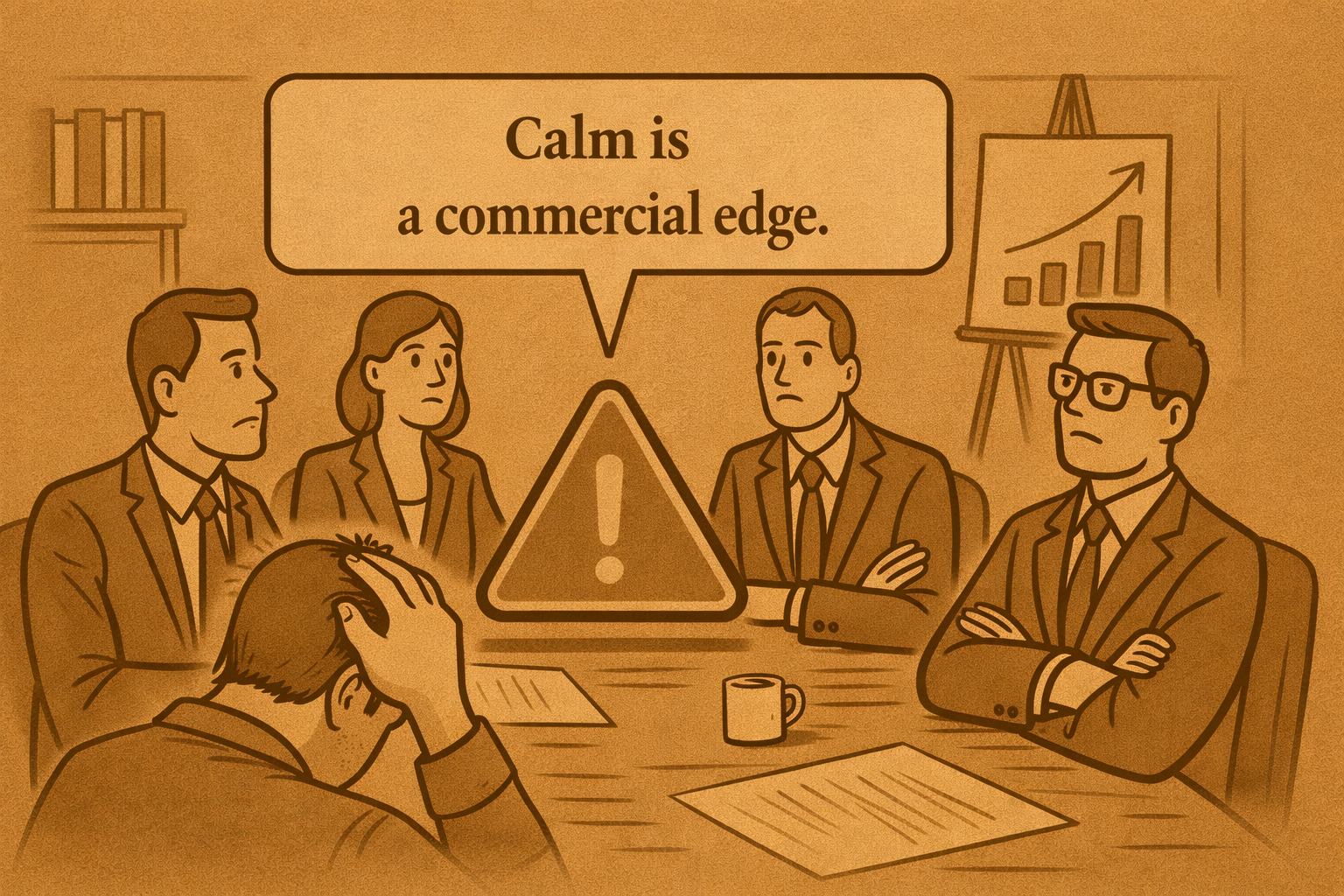
The partners meet every Monday at 8am in the boardroom above the reception area. It is three partners, a practice manager, and one senior staff member. The agenda is printed and sitting on the table.
At 7.55am the office manager walks in with a message. A long-term client in Brisbane is “furious” about a missed call and a slow email response. One partner takes the call in the hallway, comes back in hot, and puts the complaint on the table.
The fee review is dropped. The discussion on staffing for the Sunshine Coast work is pushed. The team spends the full hour rewriting response times and promising discounts for this one client. No one records a decision.
By 9am, nothing on the agenda is done. The week has been set by one incident.
Pattern: Emotional Governance
This is Emotional Governance inside a professional firm. The room takes its pace and focus from the most reactive person present.
The agenda exists, but any complaint, delay, or cash wobble can displace it. Partner meetings turn into live incident response. Structural items are labelled “when we have time”.
On the surface, the firm looks responsive. In practice, the business runs on mood. Staff learn that raising issues loudly gets faster outcomes than following process. Plans lose status because everyone knows they will shift after the next flare-up.
Analysis: How Crisis Becomes the Operating System
Analysis: When Crisis Sets the Run-Sheet
In professional firms and SME’s, this pattern builds quietly.
By the time someone calls external help, the firm has a long trail of exceptions, reversals, and unwritten deals. The problem is presented as “personality clashes”. The root cause is structural: there is no separation between incident response and governance.
Framework: Assess → Align → Act
Assess – Map Where Emotion Drives Decisions
Take one focused hour with the partners and practice manager:
You now have a clear view of how often crisis is setting timing and forum.
Align – Split Incidents from Governance
In a short working session:
Write this onto a single page. Share it with senior staff. This becomes the reference point when the next incident lands.
Act – Cooling-Off Protocol + Second Brain™
Convert this into daily practice:
The Second Brain™ retainer sits behind this. It holds the log, tracks what was promised in the heat of the moment, and brings those promises back to the table in sequence. It provides continuity when one partner is away or when tempers rise.
Tool: The Monday Meeting Stress Test
A 45-minute exercise for any firm:
If most of your structural decisions come from hijacked meetings and later change, Emotional Governance is active.
Why It Matters
Calm is a commercial edge. Firms that let the loudest problem set the agenda burn partner time, erode margin through ad hoc concessions, and confuse staff. Medium-term risks and opportunities in markets move on while the firm is still reacting to last week’s email.
Separating incident response from governance returns control to the owners. It gives clients consistency, staff clarity, and partners space to think in order, not in panic.
If this sounds like a firm you advise, introduce them to The Unravelling Map™ and the Second Brain™ retainer before the next Monday meeting is set by whoever walks in most upset.
