Scene
Two partners. A routine client issue. A minor delay on a matter that would usually resolve in one phone call.
This time, the reply is longer. One partner copies their external lawyer “for visibility”. The other notices, hesitates, then copies their own lawyer on the next email. Within a week, every message about this client carries at least one legal address in CC.
Staff start drafting emails as if they were affidavits. No one picks up the phone. Confusion that could be cleared in three minutes now runs through multi-page threads. People stop saying anything that could be misread. Silence grows between partners while the email chains grow longer.
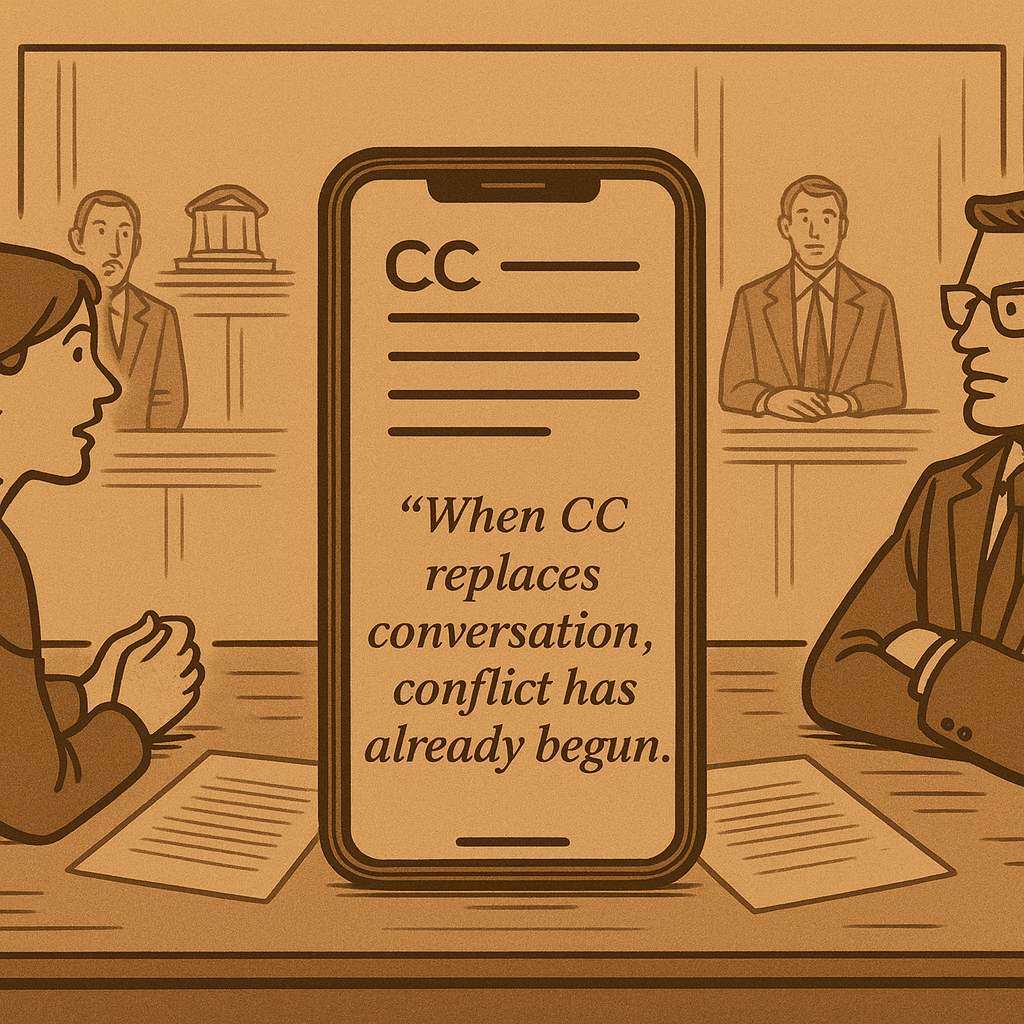
When CC replaces conversation, conflict has already begun.
Pattern: Communication as Weapon
This is not a communication problem. It is communication repurposed as evidence.
“Communication as Weapon” appears when emails stop serving delivery and start serving positioning. Every sentence is written with a future audience in mind: lawyers, courts, regulators, future buyers. Partners move from solving the issue to protecting their record.
The visible signal is simple: lawyers copied on routine correspondence with no live discussion in between. Underneath, trust has shifted from the relationship to the archive. The inbox becomes the main risk tool.
Analysis: How Email Turns Into Ammunition
The sequence is predictable.
Irritation.
A partner feels sidelined, overruled, or exposed. Instead of naming it, they tighten their written tone. Emails become clipped. Small delays get documented.
Escalation by CC.
The first lawyer appears “for context”. CC lists grow. Senior staff are added to “keep everyone aligned”. In reality, each new name raises the stakes and reduces the chance of a frank call.
Reconstruction.
Partners reread past emails to prove a point. Threads are forwarded with commentary. Narratives form: “I was clear”, “You ignored this”, “I warned you”. The inbox becomes a file of exhibits.
Formalisation.
External lawyers begin drafting replies. Ordinary operational decisions now resemble pre-litigation exchanges. Speed dies. Legal cost climbs. Any remaining trust moves from thin to broken.
What started as one copied email becomes a structural shift: partners communicate through intermediaries, not with each other.
Framework: Assess → Align → Act
Assess – Map the Conflict Channels
Run a fast diagnostic on where tension now lives:
- Pull the last three months of email between owners on recurring issues: money, staff, key clients.
- Count how often lawyers or advisers are copied on internal matters.
- Highlight threads where tone hardens, CC lists expand, or response times blow out.
Create a one-page map: “Issues × Channels”. Which topics are handled in live meetings, which by email, which through lawyers. The pattern will be clear.
Align – Decide the Right Medium for Each Issue
Bring the owners together and agree simple rules:
- Which topics must be handled face to face first (fees, partner performance, staff complaints, key client tension).
- When legal input is required, who invites it and at what stage.
- Who chairs a weekly structured meeting and who records decisions.
Use commercial tests:
- Where delay is most expensive, use the fastest live channel.
- Where risk is highest, involve legal advice early, but after an internal conversation, not before.
Document the channel rules in plain language. Treat them as part of your decision architecture, alongside authority and delegation.
Act – Reset the Rhythm
Install a new pattern:
- A fixed weekly meeting for live issues, with a clear agenda and time limits.
- A neutral recorder (operations or external chair) writes a short summary: decisions, next steps, owners, timeframes.
- One summary email per meeting goes to all partners. That email is the record.
Set one boundary: no copying lawyers on internal threads unless and until the weekly forum has tried to resolve the issue and failed. When legal input is needed, send a single, agreed brief from the recorder, not competing narratives from each partner.
Tool: The Inbox Early-Warning Scan
A 30-minute audit you can do this week:
- Pick one client, one staff issue, and one internal dispute.
- For each, print the last 20 emails between owners.
- Mark every message that includes a lawyer, accountant, or external adviser in CC.
- Count:
- Average number of people in CC.
- Number of times tone shifts to formal or defensive.
- Number of issues raised by email that never appear in formal meeting notes.
If any thread shows more than three recipients, defensive language, and no corresponding meeting record, the Email War has started.
Why It Matters
Email wars convert ordinary friction into potential litigation. Legal fees rise, but the real cost sits in lost speed, damaged staff confidence, and clients sensing internal fracture. Once lawyers become the primary audience, partners stop speaking plainly. That is when disputes harden and settlement options narrow.
Early intervention here is cheaper than any formal dispute resolution. It requires structure, not therapy.
If this pattern is emerging in one of your firms, introduce them to The Unravelling Map™ or send them to our early-warning workshop before their inbox becomes a litigation file.